Key Takeaways
-
Spain ranks 20th globally with 41,954 robot installations and 174 robots per 10,000 workers, with automotive manufacturing driving the majority of Physical AI demand.
-
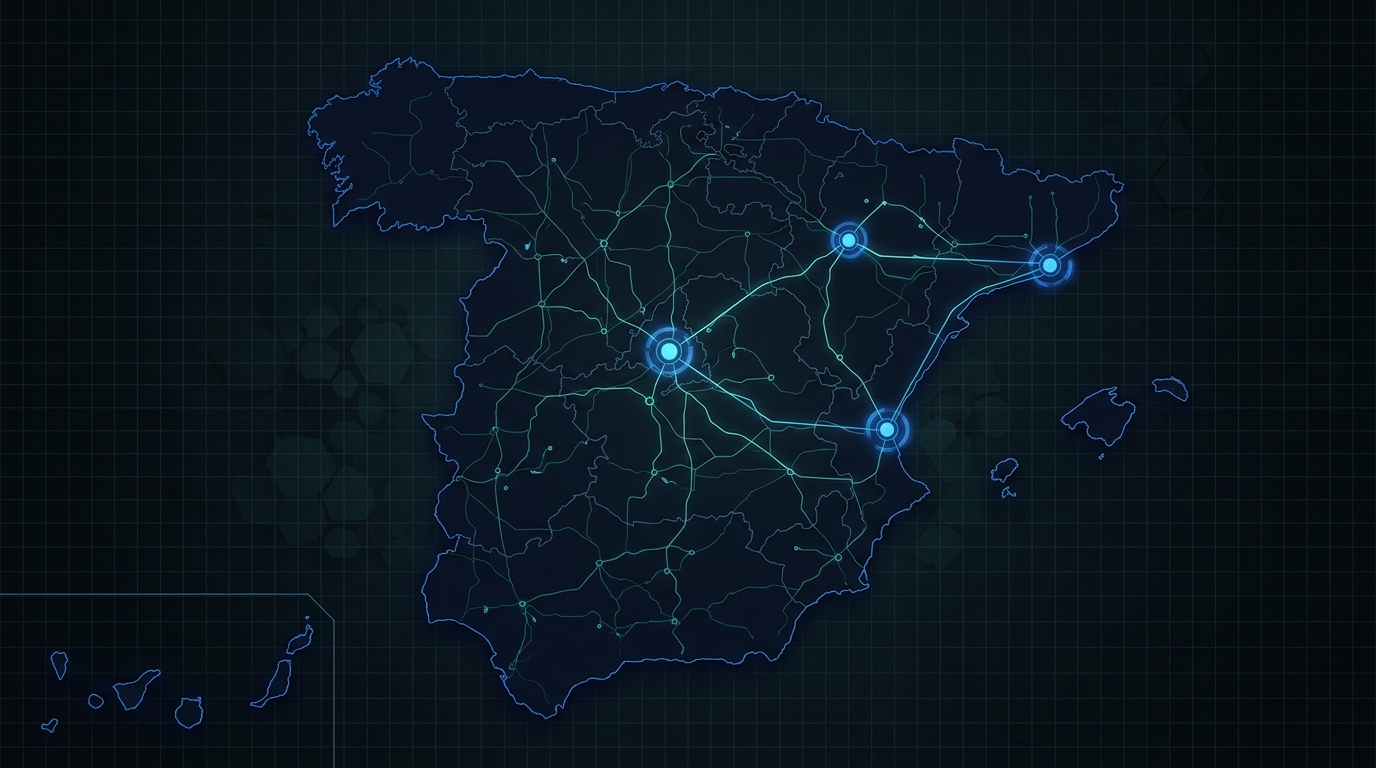
Barcelona is Spain's most dynamic robotics and tech city, combining a strong university research base with a growing startup ecosystem and international company presence;
-
Spanish language is required for most roles outside of Barcelona's international startup community and the Spanish operations of global multinationals;
-
Salaries range from €35k to €75k for Physical AI engineers, with senior research and leadership roles at top institutions and companies reaching above that range.
Spain's primary market focus has been on automating logistics and supply chain processes related to the automotive industry. While SEAT is the largest player in automotive manufacturing in Spain, located in Catalonia, there are numerous OEM and Tier 1 and 2 suppliers throughout the Iberian Peninsula. As a result, Spain has been a key market for the adoption of industrial robots in the region.
From an engineering perspective, Spain offers quick access to the EU marketplace with a good quality of life. The Spanish market is smaller and less developed than the German or French markets, but has a growing potential and is under-penetrated with engineering talent.
Physical AI Job Market in Spain
The automation of Spanish industry has increasingly gained traction over the last 20 years. The transformation of the Spanish automotive industry to produce electric vehicles will further accelerate industrial automation. Automation of logistics, e-commerce, and other fulfillment centers is gaining traction. Additionally, there are a growing number of European robotics startups, which increase competition for engineering talent.
Spain Physical AI Market Snapshot
Research published through the Spanish National Research Council (CSIC), Spain's largest public research institution, highlights growing academic investment in robotics, autonomous systems, and AI-driven manufacturing that is beginning to translate into industry partnerships and startup formation.
Industrial Automation Careers in Spain
The use of AI in the Spanish industry is focused on Physical AI. Spanish companies are using automation to optimize their operations in the automotive, food and beverage, chemicals, and other consumer packaged goods industries.
Some of the largest robotics and automation manufacturers, such as KUKA, ABB, FANUC and YASKAWA, have local offices in Spain and manufacture and sell automation systems and integrate them in Spanish factories. Employees of these systems integration companies work with robotic systems and, though it is not core development work, it gives insights into the operation of AI in industry.
For engineers building toward Physical AI careers from industrial automation backgrounds, our guide on transitioning into robotics engineering covers the skill gaps to close and the most effective ways to make that transition.
Automotive Robotics Jobs in Spain
Spain's Physical AI concentration in industry is heavily influenced by the Spanish automotive industry. The Martorell facility of SEAT, a part of the Volkswagen Group, is one of the largest automotive production facilities in southern Europe and uses significant automation in its processes. The Volkswagen and Audi facilities in Spain, as well as several Stellantis and Ford facilities, also employ extensive automation.
The Tier 1 and Tier 2 automotive suppliers in Spain, such as Gestamp and Plastic Omnium, also employ Physical AI engineers. Like their German counterparts, these companies expect their engineers to have strong controls engineering and functional safety skills.
Spain's transition to EV manufacturing, accelerated by EU policy and significant government investment through the PERTE-VEC program, is creating additional demand for automation engineers as factories modernize production lines for electric vehicle assembly.
Logistics Robotics Positions in Spain
Physical AI automation is rapidly growing in Spain. Some of the largest fulfillment centers in Spain are operated by Amazon and utilize Amazon's Kiva automation systems. Zara's parent company, Inditex, also resides in Spain and has automated much of its logistics and supply chain to support its fast fashion business model.
Spain's largest supermarket chain, Mercadona, has centralized, highly automated distribution centers. Other logistics service providers (LSPs) in Spain, including DHL and GXO, have implemented similar automation systems in their facilities.
With regard to salary and work/life balance, logistics automation roles are very competitive and comparable to similar roles in the Physical AI field. Logistics Automation roles tend to require more of an emphasis on software and systems integration than research; therefore, it can be less of a barrier for entry than other Physical AI roles.
Spain Robotics Employer Data Card
Barcelona Robotics Hub
Barcelona is Spain's Physical AI leader and offers a lot of opportunities for engineers and researchers looking to enter the field. Barcelona has a leading research University (UPC) and other universities (UB) that focus more on business and law. These, along with IRI, give Barcelona a lot of opportunities for research and business integration.
Research and centers, like IRI, help transition robotic and AI research and development into commercially competitive products.
Barcelona's startup ecosystem has generated robotics & AI companies across autonomous vehicles, agricultural robotics, inspection drones, and industrial AI. The international character of the Barcelona tech community means that a meaningful proportion of Barcelona robotics roles are available in English, which is unusual for Spain generally.
Madrid Tech Center
Although Madrid has a substantial start-up scene, it lags behind Barcelona, especially for Physical AI and Robotics companies. However, Madrid is home to several global companies' major robotics engineering hubs, such as Amazon and IBM. The UPM conducts research in this area and provides engineering graduates to the market.
When looking at large multinationals operating in Spain, Madrid is the better market for Physical AI roles, and Barcelona is better for start-ups and other roles more focused on engineering and research.
Skills for Spanish Robotics Jobs
The technical skill requirements for Physical AI roles in Spain are consistent with the broader European market, with some sector-specific emphasis reflecting Spain's automotive and logistics focus:
-
Spanish language: Required for most roles. English-first environments are primarily limited to Barcelona startups & multinational operations.
-
Functional safety: ISO 13849 and ISO 10218 appear in manufacturing & automotive postings;
-
ROS 2: Growing presence in job postings, particularly at research institutions and robotics startups. Less universal in traditional automotive and industrial roles;
-
Industrial robot programming: KUKA KRL, ABB RAPID & Fanuc Karel are standard requirements for automotive and industrial automation roles;
-
C++ and Python: Both required across software-facing engineering roles.
-
PLC programming: Siemens TIA Portal and Rockwell Studio 5000 are commonly listed for industrial automation positions.
For a full skills breakdown by role type, see our guide on what skills you need for robotics. For engineers building a portfolio to demonstrate these skills, see our practical guide on how to build a robotics portfolio.
Research Institutions in Spain
Spain's robotics research ecosystem is more active than the country's market size might suggest:
The Institute of Robotics and Industrial Informatics (IRI) in Barcelona is Spain's leading robotics research center, working on perception, manipulation, autonomous navigation, and human-robot interaction. It is a joint CSIC-UPC center and regularly collaborates with Spanish and European industry partners.
The Automation and Robotics Center (CAR) of the CSIC and Universidad Politécnica de Madrid is a research center focusing on various aspects of robotics and automation, with special attention to mobility, perception, and intelligence of autonomous systems. Both institutions recruit several research engineers and provide opportunities for engineers at the earliest stages of their careers to build their industry experience.
Salary Ranges in Spain
Spain's lower cost of living as compared to the north of Europe means that an engineering salary in Spain is broadly comparable to that of the rest of Europe. Engineers are attracted to the more liberal lifestyle offered outside Madrid and Barcelona. This is likely to become even more pronounced post-COVID.
Physical AI Engineer Salary Ranges in Spain
The combination of Barcelona's growing international tech community & the automotive sector's automation investment is creating Physical AI engineering roles that a few years ago simply did not exist here. Engineers who enter the Spanish market now, while it is still developing, will be better positioned than those who wait until competition catches up. - Robotica Network
FAQs
Where are the most robotics jobs in Spain?
Barcelona has many startup and research robotics jobs. Zaragoza, Valencia and Navarre have many automotive robotics roles. Madrid has more robotics jobs at large multinational companies. This reflects Spain's spread-out manufacturing industry.
Do I need Spanish language for robotics jobs?
Yes for most roles. Spanish is used in most manufacturing, industrial automation and traditional technology companies in Spain. English-first jobs are more common in Barcelona's international startups and at US and UK technology companies.
What is the average robotics salary in Spain?
Mid-level Physical AI engineers in Spain earn around €45k to €62k per year. Senior engineers can earn €65,000 to €75k. Living costs outside central Madrid and Barcelona are generally lower than in cities such as London, Amsterdam, or Munich.
Which companies hire robotics engineers in Spain?
SEAT and the wider Volkswagen Group network are major automotive robotics employers. Amazon, KUKA, ABB, and Inditex hire for logistics and industrial automation roles. IRI and CAR research centers also hire research engineers. Barcelona startups are another growing source of software-focused Physical AI jobs.
Is Barcelona good for robotics careers?
Barcelona has opportunities for engineers interested in research, software, and startup Physical AI roles. IRI, UPC, its international tech community, and growing startup scene support the robotics sector. English is also more common there than in many other Spanish cities.
Are there opportunities in automotive robotics in Spain?
Yes. Spain has a large automotive industry that continues to invest in automation. SEAT in Martorell, Volkswagen in Pamplona, Ford in Valencia, and Stellantis in Zaragoza employ automation and controls engineers. Automotive suppliers also create additional robotics jobs.