Key Takeaways
- South Korea holds the highest robot density in the world at 1,012 robots per 10,000 workers, more than double Germany and nearly 15 times the global average.
- Samsung, LG, and Hyundai are the anchor employers for Physical AI engineers, supported by a dense network of electronics and automotive suppliers;
- Korean is commonly required for most roles, but multinationals and a growing wave of AI-focused startups in Seoul are actively creating English-friendly engineering environments;
- Engineer salaries range from ₩50 million to ₩120 million annually, with senior roles at large conglomerates and well-funded startups reaching higher.
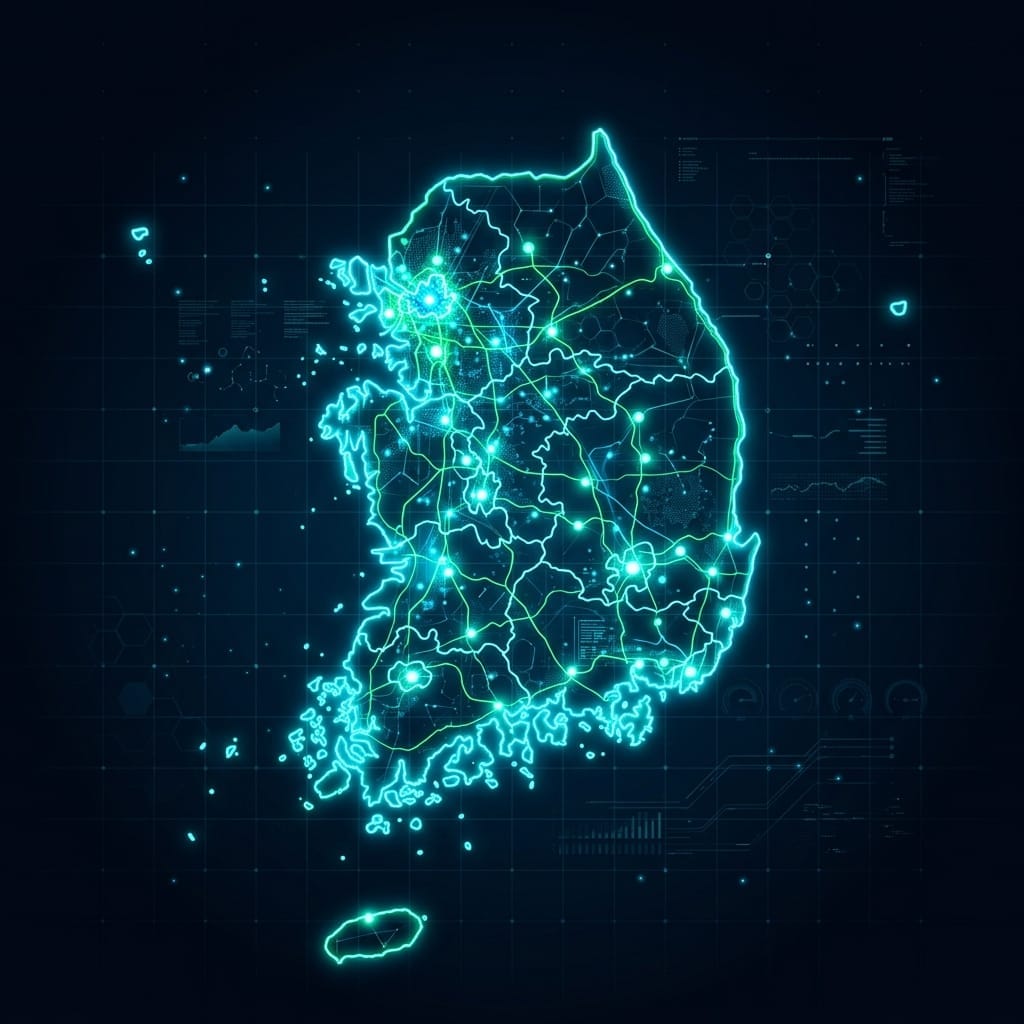
South Korea is the most roboticized nation in the world. This is neither a prediction nor a goal for the future , it is reality today. With more than 1,000 robots per 10,000 workers in the manufacturing sector, South Korea has developed its economy into one where physical AI is not a cutting-edge technology but a fully mature element of manufacturing and logistics processes.
For Physical AI engineers, this means a job market with high density, excellent employers, and some of the most challenging production settings in the world. Moreover, it means a job market where the particular culture of business organizations, language skills, and national development policy have a tangible impact on the industry, which is being steered towards becoming a leader in humanoid robotics until 2040.
This page will explain where the opportunities are, what the employer expects, what the job really requires, and what an international engineer needs to know before entering this market.
Physical AI Job Market in South Korea
South Korea's robot superiority is not incidental. Thanks to its industrial, export-oriented economy based on its global-leading electronics, automotive, and semiconductor sectors, there has been continuous investment in automation in South Korea for years. The outcome of all this is South Korea's unparalleled robot density.
The South Korean state complements the private-sector investment with policy backing. The goal of South Korea's robotics policy is to take 20% of the international market share of humanoid robots by 2040, investing over $1 billion every year in robotics and AI through state-sponsored R&D efforts.
South Korea Physical AI Market Snapshot
Smart Factory Careers in South Korea
Smart factories represent the flagship Physical AI application in South Korea. A smart factory can be defined as a factory where robots, sensors, AI, and the human workforce interact in an integrated way. The smart factory has the ability to monitor itself and adjust production, and AI helps to make decisions concerning maintenance and production optimization.
Corporations such as Samsung, LG, and Hyundai have made significant investments in smart factories. The smart factories of Samsung include the semiconductor fabs and display panel facilities, which have among the most automated production environments in the world. LG smart factories have implemented AI technology for quality control and robotized assembly. Hyundai has committed to making its automotive production plants smart factories, and it has invested in robotics through the Hyundai Robotics company and its acquisition of Boston Dynamics.
The job in a smart factory is usually an applied engineer job, which implies working on the integration of robots and AI into production, not developing prototypes. It is quite challenging work requiring good attention to detail, knowledge of systems, and experience with automation technologies.
South Korea Smart Factory Employer Data Card
Electronics Manufacturing Robotics in South Korea
The electronics manufacturing industry in South Korea is one of the heaviest users of Physical AI in the nation. The manufacture of semiconductors, printed circuit boards, displays, and batteries requires robotic systems that need to be operated in highly controlled conditions without any human interaction.
These positions lie at the junction of precision engineering and Physical AI. The engineers involved in designing and building robotic systems in the electronics manufacturing industry work on robots that need to manipulate micron-level components, work in sealed cleanrooms, and remain consistent in millions of processes.
Technical specifications for robotics engineering in electronics manufacturing are different from general robotics engineering. Motion control, vibration isolation, compatibility with cleanrooms, and high throughput are some of the major challenges in this field. Machine vision systems required in electronics manufacturing need to identify defects not visible to the naked eye.
For engineers with backgrounds in precision engineering, embedded systems, or industrial automation, South Korea's electronics sector offers roles that are genuinely at the technical frontier of what Physical AI systems can do in controlled environments. Browse controls engineering roles and perception engineer positions currently open on the platform.
Humanoid Robot Development in South Korea
The humanoid robotics segment in South Korea is still in an earlier phase of development compared to the country's smart factories, but it is advancing at a fast pace. The national 2040 strategy has facilitated a government-supported effort to develop native humanoid robots to be used in manufacturing and services.
The purchase by Hyundai of Boston Dynamics has seen one of the best humanoid and legged robot companies enter the Korean corporate scene. The combination of Boston Dynamics' engineering capabilities with Hyundai's manufacturing capacities and Korean supply chains is one of the biggest advances in humanoid robotics anywhere in the world.
Doosan Robotics is a spin-off from the Doosan industrial group and specializes in collaborative robots (cobots), which are meant to operate alongside people. The Korea Advanced Institute of Science and Technology (KAIST) has a well-known robotics research program that has been involved in several successful robot development projects.
Research publications from KAIST's robotics and AI research programs are regularly cited in global robotics literature, reflecting the quality of South Korea's academic robotics foundation.
Seoul: South Korea's Physical AI Hub
Seoul, as well as the Seoul Metropolitan area (which includes Suwon, Incheon, Seongnam, among others), is home to almost all the physical AI recruitment that takes place in South Korea. The semiconductor and devices division of Samsung is based out of Suwon and Hwaseong. The R&D and manufacturing of LG are located in Seoul. Hyundai's headquarters, as well as its robotics division, is located in Seoul. KIRIA and important government-funded research institutions that shape robotics policies in South Korea are all based out of Seoul as well.
Seoul's start-up scene regarding physical AI and AI in general has witnessed tremendous growth since 2021 thanks to government innovations and venture capitalism. Start-ups that deal with delivery robots, AI-powered manufacturing quality inspection, and hospitality and retail service robots are all hiring engineers and have the most welcoming workplace environment for foreign professionals.
What Skills Do Korean Robotics Employers Require?
Technical skill requirements in South Korea are broadly consistent with global Physical AI standards, with some sector-specific emphases.
- ROS 2 and robotics middleware: Required for most software-focused robotics roles, including at large manufacturers.
- C++ and Python: Both expected. C++ dominates for real-time & embedded production code; Python for AI and tooling;
- Computer vision and AI integration: Strong emphasis in electronics manufacturing roles where vision systems handle quality inspection at scale.
- Industrial automation protocols: Profinet, EtherCAT, and OPC-UA appear regularly in smart factory & industrial robotics postings.
- PLC programming (Siemens, Mitsubishi, Rockwell): More prominent in South Korean postings than in US or UK equivalents, reflecting the manufacturing automation density of the market.
- Functional safety: IEC 62061 & ISO 10218 appear in collaborative robot and industrial automation postings.
For a full breakdown of skills by role, see our guide on what skills you need for a robotics career. Engineers looking to build credentials in industrial automation alongside robotics will find the Robot Report's industrial robotics coverage a useful resource for staying current on tooling and platform trends.
Language Requirements in South Korea
Korean language is generally used in most South Korean companies as the working language. For positions in Samsung, LG, Hyundai, and their vendors, knowledge of Korean is expected not only for communication but also for documentation purposes, code reviews, and collaboration between teams. The expectation is even higher compared to Japan, because there are fewer English-first engineering environments.
Nevertheless, there are some trends taking place in two spheres. First of all, international corporations with South Korean facilities, including some semiconductor equipment suppliers and international automation systems companies, have English as an operating language for their engineers. Secondly, startups based in Seoul that are oriented to developing globally build an English-first environment as a part of the recruitment process.
The process of Korean language learning should be regarded as a valuable one for engineers who want to have a successful career in South Korea. Korean is not one of the easiest languages in the world, but knowledge of intermediate-level conversational Korean, together with technical skills, gives a foreign engineer a competitive advantage when applying to international-friendly positions.
South Korea is underrepresented in the job search strategies of most international Physical AI engineers & that is an opportunity. The combination of world-class manufacturing scale, serious humanoid robotics investment, and a growing number of English-friendly companies means the market rewards engineers who make a deliberate effort to engage with it. - Physical AI Jobs
Salary Ranges in South Korea
Physical AI Engineer Salary Ranges in South Korea
USD equivalents at approximately ₩1,380 per USD. South Korea's cost of living, particularly housing in Seoul, has risen significantly and should be factored into purchasing power calculations.
For context on how Korean salaries compare to other Asian Physical AI markets, see our pages on Physical AI jobs in Japan and Physical AI jobs in Singapore.
Government Support for Physical AI in South Korea
The South Korean government's engagement with Physical AI is more active and specific than in most comparable economies. Key initiatives include:
- The Robot Industry Development Act, which provides legal frameworks and funding mechanisms for robotics R&D and commercialization.
- Direct investment through the Korea Institute of Robot Industry (KIRIA) in robotics technology development, standards & industry promotion;
- The AI Robot Market Development Plan, which sets the 2040 market share targets and allocates R&D funding to achieve them;
- IITP (Institute of Information and Communications Technology Planning and Evaluation) funding for AI and robotics convergence research at universities and research institutes.
These programs create a consistent funding environment for robotics companies and research labs, which translates into stable hiring even during broader technology market fluctuations.
FAQs
Where are the most robotics jobs in South Korea?
Seoul has the largest robotics job market. Suwon and Hwaseong are major technology hubs, while Ulsan is strong in automotive manufacturing. Changwon is known for industrial machinery and robotics.
Do I need Korean language for robotics jobs?
For most Korean companies, yes. Korean is commonly used for documentation and team communication. English-speaking roles exist at international companies, startups, and research institutes, but they are less common.
What is the average robotics salary in South Korea?
Mid-level Physical AI engineers typically earn ₩55 million to ₩90 million per year. Senior engineers can earn up to ₩120 million to ₩140 million. Bonuses and other benefits can increase total compensation.
Which companies hire foreign robotics engineers?
Hyundai Robotics, Boston Dynamics Korea, and international technology companies hire foreign engineers. KAIST and ETRI also recruit international researchers. Seoul startups with global teams are another option.
Is South Korea good for smart factory careers?
Yes. South Korea is a strong market for smart factories, industrial automation, and Physical AI. Its advanced manufacturing industry and high robot adoption create strong demand for skilled engineers.
Are there English-speaking robotics jobs in South Korea?
Yes, but they are a smaller part of the market. International companies, Seoul startups, and research institutes offer the most English-friendly roles. Knowing some Korean can significantly increase your opportunities.