Key Takeaways
-
Poland ranks 17th globally for robot density at 207 robots per 10,000 workers and has over 1,100 active AI engineers, making it Central Europe's most significant Physical AI talent market;
-
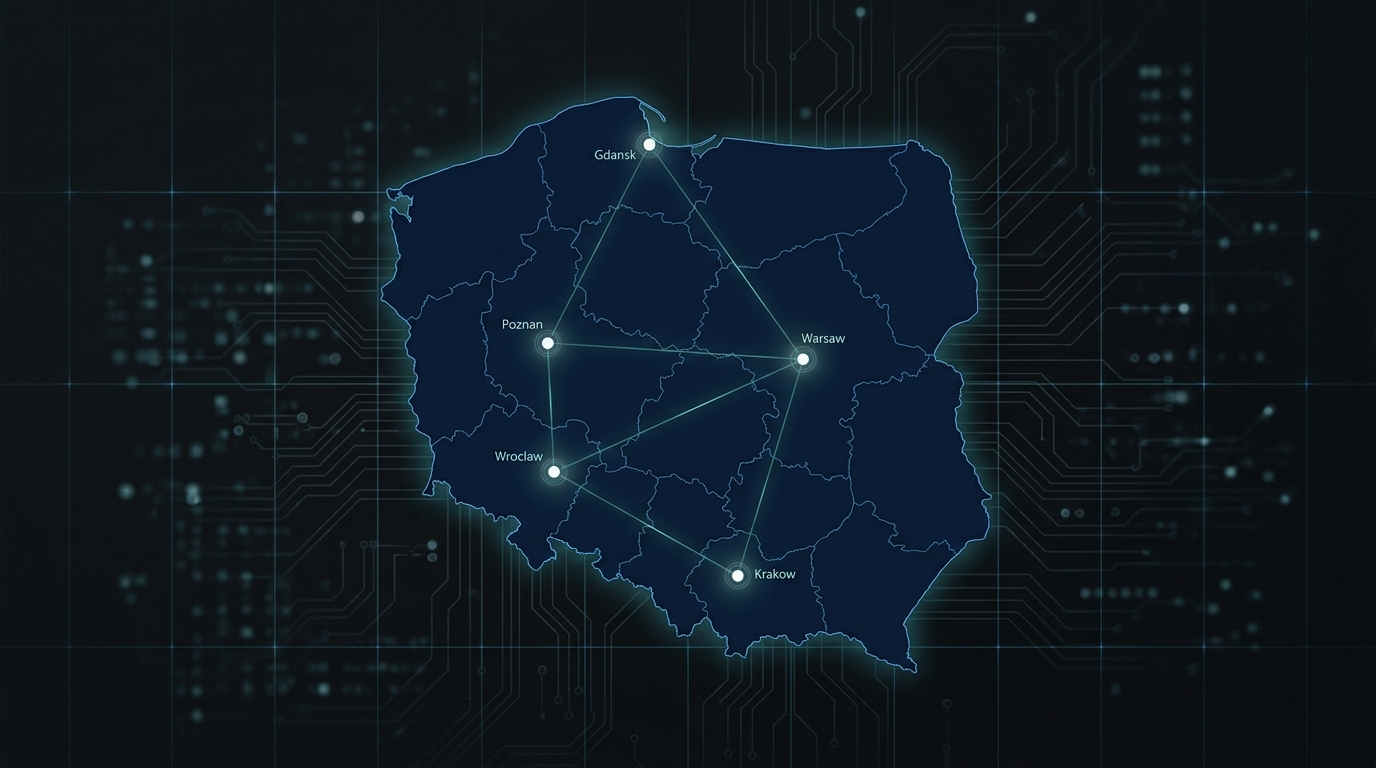
Warsaw and Krakow are the primary hubs, with Warsaw strongest for tech company engineering centers and Krakow strongest for R&D and academic-adjacent roles;
-
Polish language is often required at manufacturing companies, though English is the working language at the growing number of global technology company centers operating in Poland.
-
Salaries range from PLN 120k to PLN 300k annually, with senior roles at multinational centers reaching above that range, all at substantially lower cost of living than Western Europe.
Poland has grown into one of the major markets for Physical AI engineering talent in Europe in recent years, and is expanding rapidly. The country possesses a highly developed engineering education system, competitive pricing compared to Western Europe, and a rapidly automating manufacturing industry that is among the biggest in Central and Eastern Europe. Poland is now seen as an ideal location to build Physical AI engineering capabilities in Europe on a large scale. Engineers currently working in Poland have more options available than is generally known in the industry.
Physical AI Job Market in Poland
The manufacturing industry in Poland is among the biggest in the EU in terms of production, and the country has been adopting industrial robots faster than many other countries in the EU. Its robot density stands at 207 per 10,000 workers, which is above the global average, and investments in automation continue to grow as wages rise and companies try to retain their competitive edge.
Besides manufacturing, Poland is home to R&D and engineering centers of Google, Samsung, Intel, Motorola Solutions, IBM, and many other major global technology corporations. Many of those centers now include AI and robotics research projects, which create Physical AI engineering jobs with competitive salaries.
Poland Physical AI Market Snapshot
According to the Polish Investment and Trade Agency (PAIH), Poland's technology sector has attracted significant foreign direct investment specifically in R&D centers, with robotics, AI, and automation among the fastest-growing areas of new center establishment.
Manufacturing Automation Careers in Poland
Polish manufacturing is involved in auto, appliances, electronics, and heavy industries. It has become an important manufacturing base for companies from Europe and worldwide, especially as supply chains are being reorganized according to the nearshoring principle. It makes constant demand for automation engineers and engineers working with Physical AI to develop, maintain, and optimize robots used in manufacturing.
Volkswagen has a significant production facility in Poznan, and its supplier network in Poland is vast. Stellantis has a considerable manufacturing footprint in Poland. Samsung produces home appliances in Wronki and has one of the biggest R&D centers for consumer electronics in Warsaw. Companies such as LG Electronics, Bosch, Whirlpool, and Electrolux have manufacturing plants in Poland where automation engineering takes place.
Automation engineering jobs in Polish manufacturing focus more on controls engineering, robot integration, and PLC programming than on advanced topics like deep learning and AI, which are more common in US Physical AI jobs. This is natural for the industrial market. However, AI quality inspection, predictive maintenance, and collaborative robots are increasing demand for engineers with automation and machine learning experience.
Logistics Robotics Jobs in Poland
Poland's logistics and e-commerce industries are among the fastest-growing markets for automation in Europe. Its central location in Europe has turned Poland into a major logistics player; there are numerous logistics firms operating fulfillment centers, some of which are highly automated, such as Amazon, DHL, Raben, and many others.
Amazon has its fulfillment centers in Poland that employ its Kiva robots, and the Poland teams at Amazon are engaged in both local deployment and involvement in the development of global robotics projects. There is an Innovation Center belonging to DHL in Prague, which has impacted the implementation of automation technologies across the region, including Poland.
For engineers considering logistics robotics as an entry point into Physical AI, Poland is one of Europe's strongest markets. Roles are more accessible than deep research or hardware-heavy positions, and the scale of logistics operations creates genuine engineering challenges in systems integration, fleet management, and real-time optimization. Browse autonomy engineering roles and ROS 2 positions currently hiring across Europe.
Warsaw Robotics Hub
Warsaw is the capital of Poland and the largest center of technology and commerce in the country. The city serves as home to the Polish offices of Google (with a major engineering office), Samsung R&D Poland, Intel, IBM, Motorola Solutions, and many other companies that operate globally and have active engineering offices.
The Polish office of Samsung R&D is one of the most important centers for Samsung research outside of Korea. It specializes in artificial intelligence, computer vision, and embedded systems, with some of its research being focused on Physical AI. The engineering office of Google in Warsaw deals with large-scale artificial intelligence and infrastructure and is increasingly related to robotics because of the development of Google's Physical AI programs.
There are also many startups working in Warsaw that specialize in autonomous vehicles, agricultural robotics, medtech, and industrial AI.
Poland Robotics Employer Data Card
Krakow Tech Center
Krakow is the second technology city of Poland and a powerful R&D center in Central Europe. Engineering centers of Motorola Solutions, ABB, and Comarch, as well as a large cluster of software and AI businesses, operate in Krakow. AGH University of Science and Technology and Jagiellonian University operating in Krakow, are some of the best research institutes in Poland, and their robotics and AI programs are directly connected with the industry of the region.
The research side of Krakow's robotics and AI community is more developed than Warsaw's, making it more suitable for engineers who want to work closely with applied research. ABB's engineering center in Krakow develops industrial automation and robotics software used around the world.
Physical AI Research Institutions in Poland
Poland's academic robotics ecosystem is a meaningful part of the overall Physical AI market:
The AGH University of Science and Technology in Krakow has active robotics and automation research programs that span industrial robotics, autonomous systems, and computer vision. Warsaw University of Technology (WUT) runs similar programs with strong industry ties. Wroclaw University of Science and Technology is particularly active in embedded systems and control engineering research.
These institutions produce engineering talent that feeds into both domestic companies and the R&D centers of international firms operating in Poland. For engineers considering Polish universities as a pathway into Physical AI, the AGH and WUT programs are the strongest starting points.
Skills for Polish Robotics Jobs
The skill requirements for Physical AI roles in Poland reflect the market's dual character: manufacturing and industrial automation on one side, global technology company engineering centers on the other.
For manufacturing and industrial automation roles:
-
PLC programming: Siemens TIA Portal, Beckhoff TwinCAT, and Rockwell Studio 5000 are commonly required.
-
Functional safety: EN ISO 13849 and ISO 10218 appear in manufacturing automation postings;
-
Industrial robot programming: KUKA KRL, ABB RAPID, and Fanuc Karel for integration roles.
-
C++ and embedded C: Required for hardware-adjacent and real-time systems roles.
For technology company & research-adjacent roles:
-
Python and C++: Both required.
-
ROS 2: Increasingly listed, particularly at companies working on autonomous systems or physical robotics;
-
Computer vision and deep learning: PyTorch & OpenCV experience is commonly listed.
-
Simulation tools: Growing presence in postings from companies with training pipelines.
For a complete breakdown of robotics skills by role type, see our guide on what skills you need for robotics. For engineers considering certifications to strengthen their Polish market positioning, our guide on what robotics certifications you need covers the most recognized credentials.
Salary Ranges in Poland
Polish salaries for Physical AI engineers are lower than Western European equivalents in nominal terms, but Poland's significantly lower cost of living makes the effective purchasing power substantially higher than the numbers suggest. Engineers in Warsaw or Krakow earning PLN 180k to PLN 240k live comfortably by any European standard.
Physical AI Engineer Salaries in Poland
EUR equivalents at approximately PLN 4.3 per EUR.
Poland is one of the most strategically undervalued Physical AI markets in Europe for both engineers and employers. The combination of a strong technical university system, a maturing manufacturing automation sector & a growing cluster of global technology company R&D centers creates a job market that offers genuine depth across the full range of Physical AI roles. - Robotica Network
For engineers based in Poland who want to understand the full global Physical AI landscape, our overview of the best Physical AI jobs and career paths provides the broader context alongside the Poland-specific picture on this page.
FAQs
Where are the most robotics jobs in Poland?
Warsaw has the most Physical AI and robotics jobs overall, mainly because of technology company engineering centers. Krakow is the second major hub and is stronger for R&D and research-related roles. Wroclaw, Poznan, and Gdansk also have robotics jobs, especially in manufacturing automation and technology company offices.
Do I need Polish language for robotics jobs?
It depends on the employer. Global technology companies such as Google, Samsung, and Intel often work in English and do not require Polish. Manufacturing companies, automotive suppliers, and smaller Polish companies usually require Polish for daily work. Engineers targeting technology jobs in Warsaw and Krakow can often work without Polish, while manufacturing automation roles usually require it.
What is the average robotics salary in Poland?
Mid-level Physical AI engineers in Poland earn around PLN 120k to PLN 200k per year, or about €28,000 to €46,500. Senior engineers and research scientists at multinational companies can earn PLN 240k to PLN 300k. Poland also has a lower cost of living than many Western European countries.
Which companies hire robotics engineers in Poland?
Samsung R&D Poland, Google Poland, Intel, Motorola Solutions, ABB, Amazon, and Volkswagen Poland are among the major employers. Local logistics and manufacturing companies also hire robotics engineers. AGH and WUT universities in Krakow and Warsaw also support research engineering roles.
Is Warsaw good for robotics careers?
Warsaw has many software-focused Physical AI roles at global technology companies. It also has a large startup ecosystem and an international work environment. Krakow is another option for research-related roles and has a lower cost of living than Warsaw.
Are there opportunities in logistics robotics?
Yes. Logistics robotics is a growing area in Poland. Amazon's fulfillment centers and Poland's role as a major European logistics hub create demand for engineers working on warehouse automation, AMR systems, and logistics AI. These roles can also be an entry point into Physical AI for engineers moving from related fields.