Key Takeaways
- Austria ranks 13th globally for robot density at 245 robots per 10,000 workers, reflecting a manufacturing sector that punches well above the country's size;
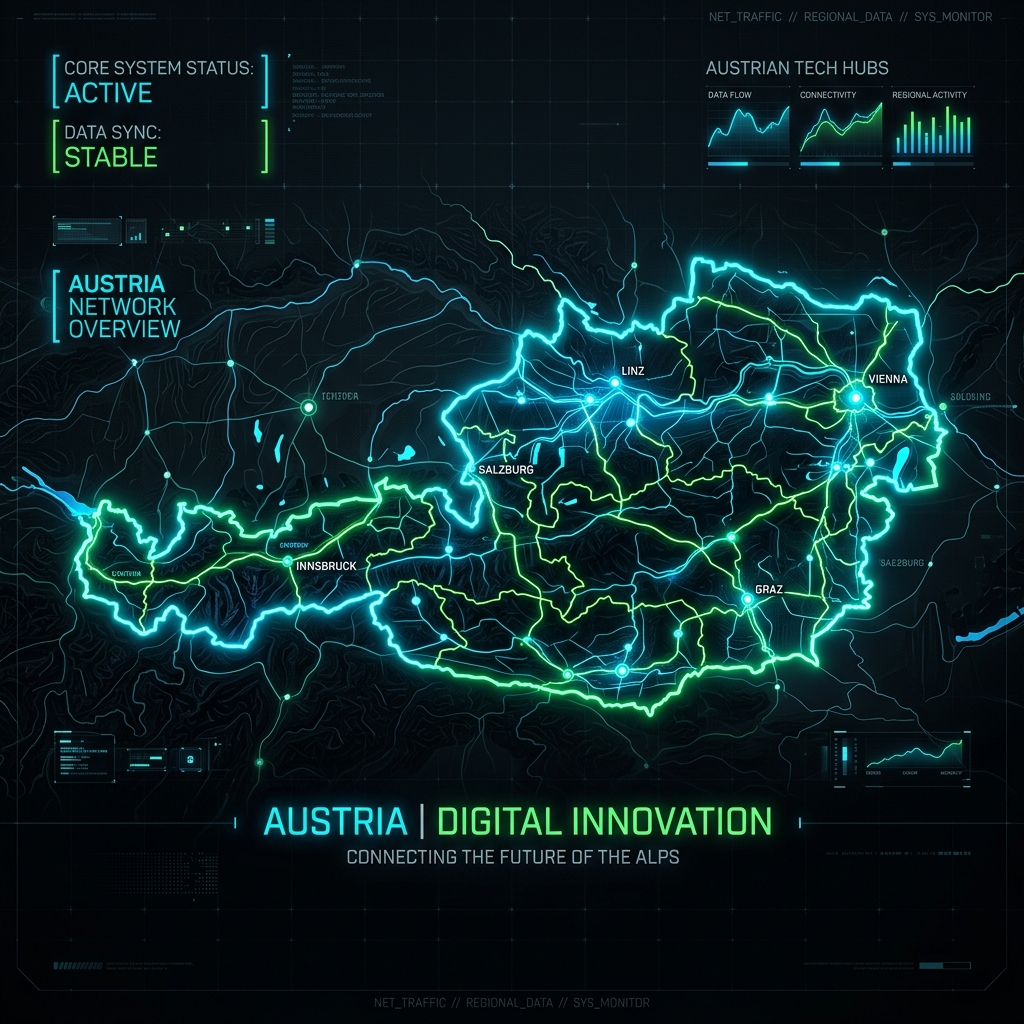
- Vienna is the primary tech hub, but strong industrial automation clusters exist in Upper Austria and Styria, anchored by automotive suppliers & machinery manufacturers;
- German language is required for most engineering roles in Austria, though English is functional at larger international companies.
- Salaries range from €45k to €90k annually for Physical AI engineers, with senior research roles at institutions like AIT reaching higher.
Austria punches above its weight in manufacturing. Automation is big business there, and Austria packs a serious robotics punch with 245 robots per 10,000 workers. The country boasts a pedigree in engineering and precision, and its proximity to Germany and its OEMs bolsters the supply chain. Austria also has a strong manufacturing and robotics ecosystem.
For Physical AI engineers, Austria offers a stable, technically serious market with strong institutions, close ties to the broader German-speaking engineering ecosystem, and a quality of life that consistently ranks among the highest in Europe. The market is smaller than Germany or the US, but it is real, growing, and underserved by international job seekers.
Physical AI Job Market in Austria
Austria is home to many of the German-speaking elite engineers, and has a stable, technically serious market that is integrated with the German engineering cluster. Austria's market is smaller than Germany or the US, but it offers opportunities and is becoming more open to international workers.
Austria tends to hire Physica AI talent for roles at companies with strong engineering heritage and concentrated automation efforts, despite having fewer open positions compared to Germany and the US.
Austria Physical AI Market Snapshot
According to the research outputs of Austrian technical universities, Austria's robotics and automation research base is concentrated at TU Wien and TU Graz, both of which have active collaborations with industry partners and produce engineering talent that feeds directly into the domestic Physical AI job market.
Industrial Automation Careers in Austria
Engel, headquartered in Schwertberg (Upper Austria) is one of the world's largest manufacturers of injection molding machines. The company has an advanced automation and robotics division. Fronius International, based in Wels (Upper Austria), is one of the largest and leading companies in the field of welding and automated robotic welding.
The process industries in Austria, including chemicals, paper, and food production, are also active automation employers. Engineers with knowledge of industrial control systems, PLC programming, and process automation will find consistent opportunities in these sectors.
Manufacturing Robotics Jobs in Austria
Geographically, Austria is well positioned in the EU, with first-tier access to German markets and supply chains. German OEMs set stringent standards on their Tier-1/2 suppliers, which, in turn, create a robust automation and manufacturing standard throughout the supply chain. Continuous and further increasing automation in Austrian manufacturing is accompanied by growing demands for robotics and AI integration in quality assurance and process control.
Engineers with interest and expertise in automation and robotics, industrial control systems (i.e., Siemens S7, Beckhoff, Phoenix Contact, Mitsubishi, GE) will find plenty of opportunities in manufacturing and process control industries in Austria. The integration of AI in robotics is expected to increase in the Austrian market in the near future.
Automotive Robotics Positions in Austria
Although there are no automotive original equipment manufacturers (OEMs) in Austria, the country has a large automotive engineering sector. BMW has its largest engine manufacturing plant in the world in Steyr, Austria. Other Austrian states have a large density of automotive suppliers.
One of the largest engineering services companies in the world, AVL, is located in Graz. Magna, an automotive supplier, employs plants and engineering services in Austria.
Graz has a large cluster of automotive suppliers. This cluster, Automobilcluster Steiermark, consists of several small and medium automotive suppliers. A large number of these suppliers concentrate on robotics and automation.
Austria Physical AI Employer Data Card
Vienna Robotics Hub
As the largest city and the cultural, economic, and political center of Austria, Vienna offers many opportunities for technology and startups. The Austrian Institute of Technology is one of the largest non-university research institutes and has one of the most advanced robotics research labs in Austria. TU Wien has a top-notch robotics and automation lab. It is one of the best universities in the German-speaking countries.
Vienna has a growing robotics and AI startup scene. It has a central location in Europe, especially with the UK's recent exit from the EU, and a great quality of life. More and more International Engineering Talent has been moving there.
Robotics Research Institutions in Austria
Austria's research institution landscape is an important part of the Physical AI ecosystem, particularly for engineers interested in roles that bridge academic research and industry application.
The Austrian Institute of Technology's Robotics division works on autonomous systems, human-robot interaction, and mobile robotics applications for transport, inspection, and safety. AIT regularly collaborates with Austrian industry partners and EU-funded research consortia.
TU Wien's Automation and Control Institute (ACIN) is one of the leading European research groups in control systems and robotics. TU Graz has strong programs in computer vision, autonomous driving, and robot learning.
Skills for Austrian Robotics Jobs
The skill requirements for Physical AI roles in Austria align with the German-speaking engineering market broadly, with some sector-specific emphasis:
- German language: Required for most roles. English is workable at larger international companies; German is expected at Austrian Mittelstand firms.
- MATLAB & Simulink: Common in automotive & control systems engineering roles.
- ROS 2: Increasingly listed, particularly at startups and research-adjacent companies. Less universal than in the US market but growing.
- C++ & Python: Both required across engineering roles;
- Industrial robot programming: KUKA KRL, ABB RAPID, and Fanuc Karel are commonly listed at manufacturing companies;
- Functional safety: ISO 13849 & EN ISO 10218 appear in manufacturing and automotive robotics postings.
For engineers assessing their readiness for Austrian Physical AI roles, our guide on what skills you need for a robotics career covers the full technical stack. For career changers considering the Austrian market from a software background, the guide on transitioning from software engineering to robotics is directly applicable.
Robotics Salary Ranges in Austria
Austria has a collective bargaining system and a quite high minimum wage. Salaries in Austria may be lower than in Germany, but the total compensation may be higher because of benefits.
Austrian salaries for physical AI engineers (engineers who work with deep learning) are about 130k EUR to 150k EUR, while German salaries are about 150k EUR to 160k EUR.
Physical AI Engineer Salary Ranges in Austria
Austria is an underappreciated Physical AI market for engineers who want depth over scale. Engineers who prioritize craft & technical rigor over speed & hype tend to thrive in the Austrian engineering culture. - Robotica Network
FAQs
Where are the most robotics jobs in Austria?
Vienna has the highest concentration of technology and research roles. Graz and Styria are strong for automotive and precision engineering robotics, with companies such as AVL and Magna. Linz and Upper Austria are important markets for industrial automation and machinery.
Do I need German language for robotics jobs in Austria?
For many roles, yes. German is widely used in Austrian manufacturing and engineering companies. Some multinational companies and international research teams offer English-speaking positions. German can significantly expand your job options.
What is the average robotics salary in Austria?
Mid-level Physical AI engineers typically earn €55,000 to €75,000 per year. Senior engineers and research scientists can earn around €80,000 to €90,000. Total compensation varies by company, experience, and location.
Which companies hire robotics engineers in Austria?
AVL, Engel, Fronius, Anton Paar, Magna International, B&R Industrial Automation, and BMW's Steyr plant are among the companies employing robotics and automation engineers. AIT and TU Wien also offer research and engineering opportunities.
Is Vienna good for robotics careers?
Vienna is particularly relevant for research, software, and technology roles, with organizations such as AIT and TU Wien. Graz and Upper Austria have stronger concentrations of manufacturing robotics and industrial automation jobs.
Are there opportunities in automotive robotics in Austria?
Yes. Austria has a strong automotive engineering sector involving companies such as BMW Steyr, Magna, and AVL, along with many suppliers. These companies create opportunities in robotics, controls, embedded systems, automation, and systems engineering.